ReverseMortgageKingston.ca sets out how Kingston homeowners 55 and older can pay for repairs and accessibility changes from the value of their home. A reverse mortgage is one way to do it, with no required monthly mortgage payments. City help and a federal tax credit are worth checking too, so both are covered below.
How old Kingston’s homes are
Most homes in Kingston were built more than 45 years ago. In the 2021 census, 52.7% of the city’s occupied homes were built before 1981, and 21.5% were built in 1960 or earlier (Statistics Canada, 2021 Census Profile, Kingston).
The same census counted 3,780 Kingston homes needing major repairs. That was 6.5% of occupied homes, based on what the people living in them reported.
Repairs that help you stay in your home
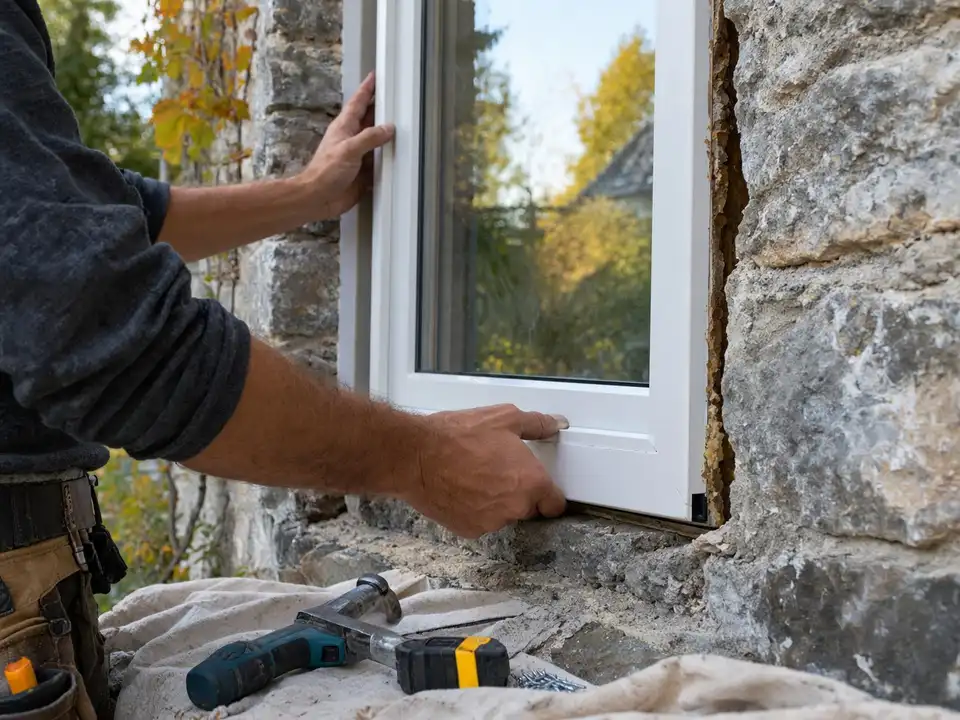
A roof, new windows and a furnace are the big costs on an older house. Each one is easier to face when the money is already in your bank account.
Accessibility changes
Some changes make a home safer as you get older. Grab bars, a stair lift, a walk-in shower or a ramp at the front door can let you stay in your home longer. These can be paid for the same way as any other repair.
Your home’s condition is part of approval
The lender’s appraiser notes the state of the home. A house in good repair is simpler to approve. If a needed repair is already booked, it can sometimes be built into the mortgage with a holdback, which is money kept back until the repair is finished.
Help from the City: Kingston-Frontenac Renovates
The City of Kingston offers Kingston-Frontenac Renovates for lower-income homeowners. In 2026 it offers a forgivable loan of up to $15,000 for repairs, and an accessibility grant of up to $5,000 that you don’t repay (City of Kingston).
The loan is forgiven over 10 years, as long as you stay in the home. Repairs it lists include heating, roofs, foundations, windows and doors that no longer work, ramps, lifts and bathroom changes. Work done before approval doesn’t count.
Limits and the lien rule
The program has limits on household income, total assets and the home’s MPAC assessment (the value the province’s assessment agency sets for property tax). The limits change, so confirm the current ones with the City before you count on it.
The City allows a first mortgage that is in good standing, but not a second mortgage or any lien. A reverse mortgage is normally the first mortgage on the home, and the City registers its own loans over $5,000 on title. Ask the City how the two would be treated before you apply for either one.
The federal Home Accessibility Tax Credit
The Home Accessibility Tax Credit is for a person 65 or older, or one eligible for the disability tax credit. You can claim up to $20,000 of eligible expenses a year (Canada Revenue Agency).
For 2026 the credit is 14% of those expenses, so the most it can save is $2,800 (Finance Canada). The credit only lowers tax you owe; it is not paid out as a refund.
The renovation has to help the person get into, move around or function in the home, or lower the risk of harm. Routine repairs and upkeep don’t qualify.
Ways to pay for the repairs
Three ways to pay for big repairs are savings or a RRIF (registered retirement income fund), a home equity line of credit, and a reverse mortgage. Each one fits a different situation, and the comparison table on this page sets out the main differences.
Which one suits you depends on your income, your taxes and how long you plan to stay. Richard Hopkins, Mortgage Broker, looks at the whole picture. His recommendation is based on your situation, even when the best answer is not a reverse mortgage.
An illustrative example on a $566,800 house
For example, picture a widower of 75 whose detached house appraises at $566,800. KAREA put the typical single-family home in Kingston and area at that price in September 2026 (KAREA via CREA). At 75, he could qualify for up to 57.75% of the home’s value, which is about $327,300.
He still owes $40,000 on a home equity line of credit. It is paid off first from the same money, which leaves about $287,300 ($327,300 minus $40,000).
He takes $55,000 for repairs, matching his contractors’ quotes, on top of the $40,000 that clears the line of credit. Interest is charged only on the $95,000 he takes, and nothing is due monthly. His property tax, insurance and upkeep stay his to pay.
The Kingston reverse mortgage calculator shows the most you could qualify for at your age.
Heritage homes need a permit for some exterior changes
Kingston has three Heritage Conservation Districts: Barriefield Village, Market Square and Old Sydenham. Together they protect more than 700 properties (City of Kingston).
In those districts, a heritage permit may be needed for exterior changes, such as new windows. Routine maintenance needs no permit. Allow time for a permit before you book contractors. The page on reverse mortgages for heritage homes in Kingston has more detail.
What the reverse mortgage costs
The four lenders’ advertised five-year fixed rates were 6.23% to 6.49%, checked October 31, 2026. Setting up the mortgage costs about $2,000 to $3,500, once. That includes the appraisal, the lender’s set-up fee and about $800 to $1,200 for your own lawyer.
Richard charges you nothing; the lender pays the brokerage after the mortgage funds. Every fee is listed in the guide to reverse mortgage cost in Kingston.
Interest adds to the balance, but home values often grow too, so your equity is not certain to shrink. You can never owe more than your home is worth when the mortgage comes due, as long as taxes, insurance and upkeep are kept up. This is typically called the no negative equity guarantee.
Bills that stay yours
Property tax is still due on time. The guide to Kingston property tax for seniors explains the City’s credits and deferrals. If repairs could free up space for family, the page on adding a second unit in Kingston explains the City’s rules. If the plan is help at home rather than renovation, see paying for home care in Kingston.
What Richard Hopkins handles for you
- Works out how much your home could provide for repairs
- Compares every reverse mortgage lender in Canada for your home
- Subtracts what you already owe, so the real amount is clear
- Emails every lender compared and the best deal for your plans
- Explains when a booked repair can be built in with a holdback
- Points out City and tax-credit help worth checking first
- Copies your family on every email if you want them included
- Gives a recommendation even if it's not a reverse mortgage
Your choices next to each other
| Question | Reverse mortgage | Home equity line of credit | Savings or RRIF withdrawal |
|---|---|---|---|
| Monthly payments | Nothing due monthly on the mortgage; you still pay tax, insurance and upkeep | Required every month, and they rise when the prime rate rises | None; the money is already yours |
| Who qualifies | Every owner 55 or older; based on age and home value, with no bank-style income test | Based on income and credit, including a stress test | Anyone with savings or a RRIF (registered retirement income fund) |
| Tax | Loan money, not income, so it is not taxed | Loan money, not income, so it is not taxed | RRIF withdrawals are taxable income and can reduce the GIS or, at higher incomes, the OAS |
| Effect on equity | Interest adds to what you owe, while home value growth may offset some or all of it | What you borrow stays owing until you repay it | Your home's value stays as it is; your savings go down |
| Set-up cost | About $2,000 to $3,500, once | Legal and appraisal fees, which some banks cover | No set-up cost |
Kingston guides that go deeper
- What Does a Reverse Mortgage Cost in Kingston?
- Kingston Property Tax for Seniors: Rates, Due Dates and Help in 2026
- Long-Term Care in Kingston: Costs, Waiting Lists and Paying for It
Sources
Figures checked October 16, 2026.
- Statistics Canada, 2021 Census Profile, City of Kingston
- City of Kingston, Kingston-Frontenac Renovates (2026)
- CRA, home accessibility expenses (tax return line 31285)
- Finance Canada, report on the 14% lowest tax rate and its effect on credits
- City of Kingston, Heritage Conservation Districts
- KAREA (Kingston and Area Real Estate Association) via CREA, September 2026 market data